More Than Rhinestones: Remembering Dolly Parton
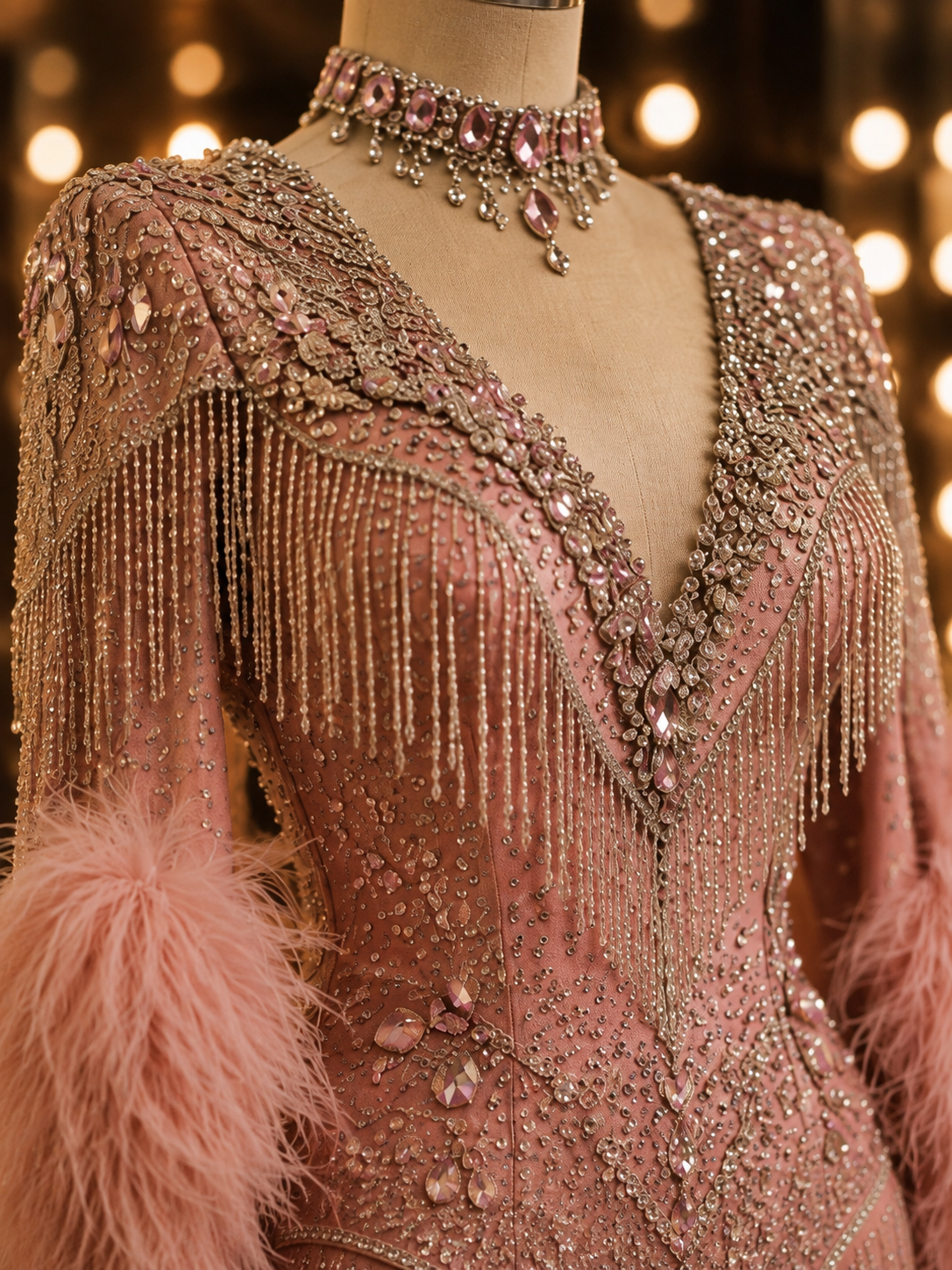
A fashion icon, a Southern original, and a reminder that kindness never goes out of style.
There are certain people whose style becomes so completely their own that eventually, you stop seeing the clothes separately from the person wearing them. Dolly Parton was one of those people. The towering blonde hair, rhinestones, fitted dresses, fringe, long nails, high heels, and unapologetic sparkle created a silhouette that was recognizable almost anywhere. But Dolly was never simply a woman in rhinestones. She was a songwriter, actress, businesswoman, philanthropist, storyteller, and one of the most recognizable women in American culture. She was glamorous and larger than life, yet somehow never seemed above anyone else. Perhaps that is why losing her feels like losing something much bigger than a celebrity.
The Woman Behind the Rhinestones
Born in the mountains of East Tennessee as the fourth of twelve children, Dolly grew up with very little money but seemingly no shortage of imagination. Long before the designer costumes and custom gowns, her mother sewed clothes for the family from inexpensive fabrics and whatever was available. Those humble beginnings eventually became part of Dolly’s story, most famously through “Coat of Many Colors.”
As her career grew, so did the image that would become unmistakably hers. The sky high heels, famous blonde hair, bold makeup, fitted silhouettes, Western influences, and extraordinary amount of sparkle were never simply about following fashion. They became a form of personal expression. Trends changed around Dolly for decades, yet she never seemed particularly interested in changing herself to accommodate them. She knew what she loved, refined it, exaggerated it, and eventually made it iconic.
That may be one of the most interesting things about Dolly Parton’s fashion legacy. In a world that constantly tells women what is tasteful, sophisticated, flattering, or appropriate for their age, Dolly seemed largely uninterested in those rules. More hair, more rhinestones, more fringe, more color, more makeup, and more glamour were not things she eventually grew out of. They were part of the visual language she created for herself.
Femininity Was Never Her Weakness
Dolly also never seemed to believe that looking feminine meant she had to be taken less seriously. Women have often been encouraged to tone themselves down when they want to appear powerful, as though femininity somehow needs to be removed before intelligence can be recognized. Dolly went in the opposite direction. She walked into rooms with enormous blonde hair, long painted nails, fitted dresses, rhinestones, and towering heels while building an extraordinary career as a songwriter, entertainer, actress, and businesswoman.
There was something wonderfully clever about it. The clothes almost dared people to underestimate the woman wearing them. Dolly never needed to surrender her femininity to prove that she was powerful, and she never apologized for enjoying beauty, glamour, or excess. She showed generations of women that strength and femininity were never opposites. You could be both, and you could decide for yourself what being a powerful woman looked like.
The Dolly I Knew Through the Movies
Like so many people, my affection for Dolly was never limited to her music. Some of my favorite memories of her came from watching her on screen. In 9 to 5, Doralee Rhodes was glamorous, vulnerable, funny, and strong, and the film managed to entertain while saying something very real about the experiences of women in the workplace. Then there was Truvy Jones in Steel Magnolias, a role that somehow felt made for Dolly. Inside Truvy’s beauty salon, hairspray, gossip, laughter, friendship, and heartbreak all existed together. Beneath the humor was something deeper about the extraordinary strength that can exist when women simply show up for one another.
Decades later, Dumplin’ carried Dolly’s influence to another generation. Although she was not physically at the center of the film, her music and spirit were woven throughout a story about confidence, beauty, and learning not to measure your worth against someone else’s definition of what you should look like. It was a message that felt perfectly suited to Dolly because she had spent most of her life doing exactly that. She decided who she wanted to be and then had the courage to be her.
Kindness Never Goes Out of Style
It would be easy to write an entire journal about Dolly Parton’s clothes, but that would tell only part of her story. Somewhere along the way, she became known for something even more beautiful than her wardrobe: her kindness. Her philanthropic work remained deeply connected to where she came from. In 1995, she created Dolly Parton’s Imagination Library, inspired in part by her father, who could not read or write. What began as a program providing books to children in her home county eventually grew far beyond Tennessee, putting books into the hands of millions of children.
There was also something quieter about Dolly’s kindness that cannot be measured by donations or charitable programs. She seemed to understand that people could live differently, believe differently, look differently, and come from entirely different worlds without having to become enemies. In an increasingly divided culture, there is something worth remembering in that. We do not have to agree with everyone or understand every choice another person makes to treat them with dignity, compassion, and respect. For someone famous for being covered in sparkle, perhaps one of Dolly’s greatest gifts was making other people feel seen.
Style Is More Than What We Wear
Fashion journals usually talk about clothing, silhouettes, designers, trends, and the things we put on our bodies to tell the world something about who we are. But style can be bigger than that. It is also the way we move through the world, how we treat people, how generously we give when we have something to give, and how comfortable we become with simply being ourselves.
By that definition, Dolly Parton had extraordinary style. Her rhinestones told us she loved glamour. Her towering heels and famous blonde hair told us subtlety was never particularly interesting to her. But her life told us something more important. There was room for everybody.
Perhaps that is the greatest fashion lesson Dolly ever gave us. Personal style is not about becoming whatever happens to be fashionable at the moment. It is about knowing yourself well enough that you no longer need everyone else to understand your choices. Dolly found an image that felt like her and spent decades refining it rather than abandoning it every time fashion changed.
There will never be another woman who wears rhinestones quite the same way, but perhaps we can carry forward the most beautiful part of Dolly’s style: the confidence to be ourselves, the grace to respect people who are different from us, the willingness to give when we have something to give, and the understanding that kindness will always be fashionable.
The world has lost one of its brightest lights, but thankfully, Dolly left us plenty of sparkle.
Xx - Chloe