How Technology is Redefining Fashion
What if the next great fashion designer is not holding a pencil? What if they are sitting in front of a computer, creating a garment that has never existed before, or using artificial intelligence to predict what people will want to wear six months from now? For hundreds of years, fashion has been shaped by fabric, sewing, craftsmanship, and the hands of designers. Today, technology is beginning to change nearly every part of that process. From artificial intelligence and digital clothing to 3D printed garments, the future of fashion is no longer something we have to imagine. It is already being created.
Artificial intelligence is one of the biggest changes happening in fashion because it can influence the process long before a garment reaches a runway. Traditionally, trend forecasting has depended heavily on designers, buyers, forecasters, and researchers studying everything from runway collections and street style to cultural movements and consumer behavior. AI can approach that process differently. It can analyze enormous amounts of information and identify patterns that might be difficult for a person to see on their own. Fashion companies are already exploring AI for trend prediction, personalization, product recommendations, and other parts of the shopping experience. Vogue Business has reported that AI became one of the defining conversations in fashion technology, particularly as brands began moving beyond experimentation and looking for practical ways to use it.
This could completely change the way a fashion collection begins. Imagine a designer preparing for a future season. Instead of beginning with a blank mood board, they could use AI to analyze thousands of images, colors, fabrics, silhouettes, searches, and consumer preferences. The designer could then see patterns emerging across all of that information. Maybe soft tailoring is becoming more popular, a particular shade of blue is appearing more frequently, or consumers are becoming interested in certain types of fabrics. AI can organize those patterns and present them as possibilities.
A mood board is more than a collection of images. It is an expression of a designer's point of view. A designer may place a photograph of an old building beside a painting, a piece of fabric, a flower, or a photograph from a completely different era because something about those things creates a feeling. That connection may not be logical enough for a computer to understand. AI can recognize patterns, but the designer still has to decide what those patterns mean. This is where technology becomes especially interesting. Rather than completely replacing creativity, AI can become another source of information that a designer uses to develop an idea.
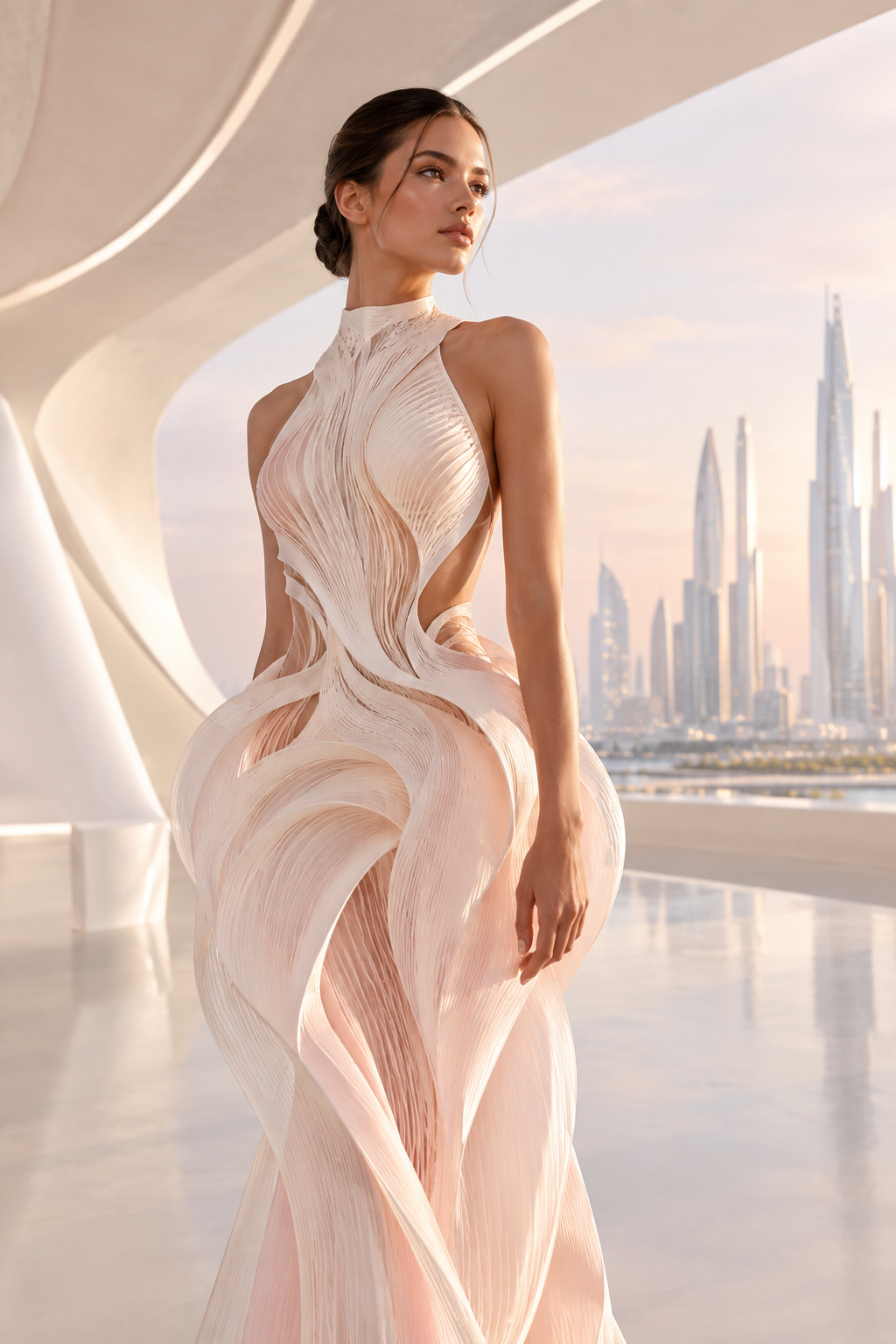
The same idea applies to the actual creation of clothing. One of the most fascinating examples is 3D printing, which allows garments and garment components to be created layer by layer from a digital design. Instead of cutting fabric into pieces and sewing them together, a designer can create a digital structure and use a printer to produce a physical object from it. This opens possibilities that traditional fabric construction cannot always achieve.
Iris van Herpen has become one of the most recognizable designers associated with this type of experimentation. She created her first 3D printed dresses in 2009 and has continued combining technology with traditional craftsmanship. Early 3D printing presented major limitations because materials were not always flexible enough to function like clothing. Van Herpen has described how the technology has developed, including improvements that have made flexible printed materials more practical.
What makes her work especially interesting is that technology does not eliminate craftsmanship. In fact, it can create entirely new forms of craftsmanship. Van Herpen has explained that much of the work in her atelier is still done by hand. One of her couture collections involved 3D printing, laser cutting, hand manipulation, and hand stitching rather than simply pressing a button and allowing a machine to create an entire dress.
That distinction is important because it challenges the idea that technology automatically makes fashion less personal. A machine may create the structure of a garment, but a person still decides what that structure should look like, how it should move, how it should feel, and whether it is actually beautiful. In some cases, technology can give designers more freedom rather than less. Shapes that would be extremely difficult to cut and sew by hand can be created digitally. Materials can be tested in unusual forms. A garment can be adjusted on a computer before anything is physically produced.
This also creates an interesting possibility for sustainability. Fashion has traditionally required brands to make large quantities of clothing before knowing exactly how much consumers will want to buy. Technology could eventually make more customized and made to order production easier. Digital sizing systems, body scanning, and computer aided pattern making can allow garments to be created more specifically for individual bodies. Companies are already experimenting with technologies designed to improve fit and personalization.
Instead of producing thousands of identical garments and hoping they sell, imagine ordering a dress online and having it digitally adjusted to your measurements before it is produced. The garment would not have to exist in a warehouse waiting for someone to purchase it. It could be created because someone already decided they wanted it. That does not solve every environmental problem in fashion, but it could change the relationship between production and demand.
Then there is digital fashion, where clothing does not necessarily need to exist physically at all. A digital garment can be designed specifically for an image, video, social media post, virtual environment, or digital avatar. Someone could purchase a piece of clothing that they never physically wear. At first, that idea may sound strange because fashion has traditionally been connected to the physical experience of touching fabric, putting on a garment, and seeing it move on the body. But fashion has always been about more than physical protection. It is also about identity, creativity, and self expression.

The growing interest in digital fashion raises a fascinating question: if a person can express themselves through clothing that exists only on a screen, does that clothing still count as fashion? There may not be one answer. For some people, clothing will always need to be something they can physically touch and wear. For others, especially people who spend much of their lives online, digital clothing may become another form of personal style.
Artificial intelligence is making this conversation even more complicated. AI can now generate fashion imagery, create visual concepts, and transform ideas into images in seconds. Fashion companies are experimenting with AI generated visuals, interactive shows, and digital experiences. In 2026, H&M collaborated with photographer Nick Knight and SHOWstudio on an AI powered interactive fashion presentation that transformed traditional photography and illustration into real time fashion films. The project used AI to expand the presentation rather than simply replacing the people who created the original work.
But the speed of these technologies also creates a problem. If a computer can generate hundreds of fashion concepts in minutes, what makes one idea meaningful? Fashion has always been influenced by the world around it, but AI introduces a new question about where inspiration comes from and who deserves credit for it. Designers, photographers, illustrators, and other creatives are now having to think about authorship, originality, and how technology should be used in creative work. These questions are becoming increasingly important as AI moves from an experimental tool into everyday creative processes.
Perhaps the future of fashion will not be entirely digital or entirely handmade. It may be both. A designer could use AI to identify an emerging cultural movement, build a mood board from those ideas, create a digital pattern, 3D print part of the garment, and then finish it by hand. Technology could handle calculations and repetition while the designer focuses on emotion, storytelling, proportion, and beauty.
That may be the most important part of fashion's technological future. The purpose of technology is not necessarily to make the designer disappear. It may be to give the designer more possibilities.
Fashion has always changed when new materials, machines, and cultural ideas have appeared. The sewing machine changed production. Synthetic fibers changed what clothing could be made from. The internet changed how trends spread. Now artificial intelligence, 3D printing, and digital design are changing what it means to create a garment in the first place.
The most exciting question is not whether technology will replace fashion. It is what fashion will become when designers have access to tools that previous generations could never have imagined. The clothes of the future may not always be sewn, and they may not always exist in the physical world. But behind the technology, there will still be something familiar: a person with an idea, trying to turn imagination into something that makes us feel something.